

IDC MarketScape vendor analysis model is designed to provide an overview of the competitive fitness of technology and suppliers in a given market. The Capabilities score measures supplier product, go-to-market and business execution in the short-term. The Strategy score measures alignment of supplier strategies with customer requirements in a 3-5-year timeframe. Finally, the company paid salaries which were in cash amounting to $3,000. The inventory asset is recorded and the obligation to pay the suppliers is reflected as a liability. The cash inflows to a company or business are considered under revenue.

It reveals the financial structure
Want to learn more about recording transactions and doing accounting for your small business? This formulation gives you a full visual representation of the relationship between the business’ main accounts. We’ll explain what that means, along with everything else you need to know about the accounting equation as we go on. Because of the two-fold effect of business transactions, the equation always stays in balance. If accounting equations we rearrange the Accounting Equation, Equity is equal to Assets minus Liabilities. Net Assets is the term used to describe Assets minus Liabilities.
- It is fundamental to the double-entry bookkeeping system of accounting, which helps us understand from the illustration above that total assets should be equal to total liabilities.
- Income and expenses relate to the entity’s financial performance.
- The cost of goods sold equation allows you to determine how much you spent on manufacturing the goods you sold.
- Finally, the company paid salaries which were in cash amounting to $3,000.
- The general ledger serves as the eyes and ears of bookkeepers and accountants and shows all financial transactions within a business.
- Presented below is the basic accounting equation missing amounts (in thousands).
How the accounting equation connects to financial statements
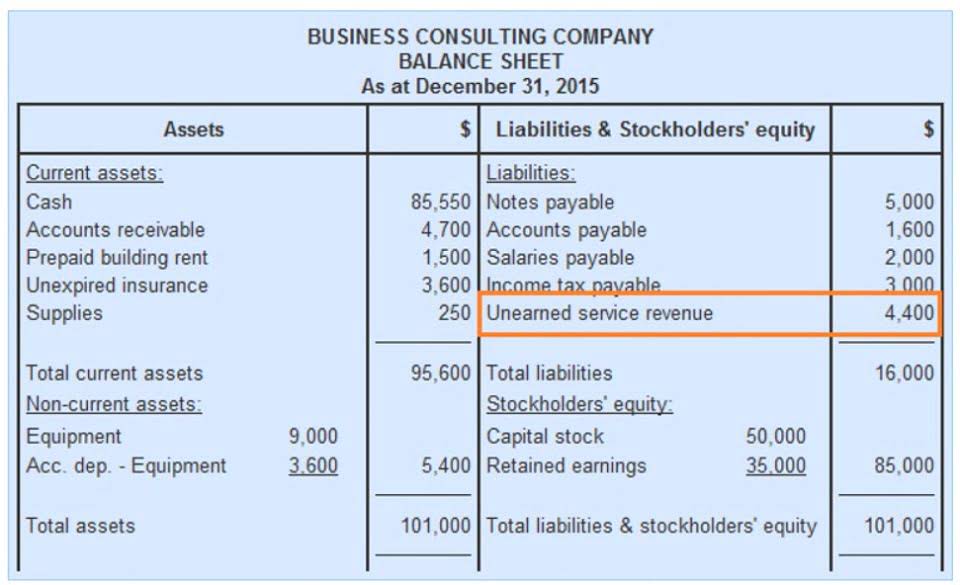
Assets are everything the business owns or controls that has value. Think of cash in the bank, office equipment, inventory, or even unpaid customer invoices. The accounting equation forms the foundation for key financial reports like the Balance Sheet and Income Statement.
Accounting Equation: Definition, Formula, and Calculation

As you venture further into the realm of finance, mastering the accounting equation will empower you to analyze a company’s financial health with greater precision. Remember, this foundational principle ensures that every asset has a corresponding source of funding, whether it’s through debt or owner investment. Take the time to apply this knowledge in your financial assessments and decision-making processes; it will serve you well in understanding the dynamics of any business you encounter. Keep exploring and deepening your financial knowledge, as a strong grasp of these concepts can open doors to new opportunities and insights in your financial journey. When working with the accounting equation, it’s essential Retained Earnings on Balance Sheet to ensure accuracy in your financial reporting.
- While trying to do this correlation, we can note that incomes or gains will increase owner’s equity and expenses, or losses will reduce it.
- If a transaction is completely omitted from the accounting books, it will not unbalance the accounting equation.
- The nominal (or par) value is $1.00, and the accounting rules require the par amount to be reported separately from the additional above par.
- With Deskera you can automate other parts of the accounting cycle as well, such as managing inventory, sending invoices, handling payroll, and so much more.
Accounting Equation In Income Statement
- The accounting equation ensures that a company’s financial statements are accurate and balanced, which is crucial for effective financial management and reporting.
- Inventory includes all raw materials, work-in-process, finished goods, merchandise, and consigned goods being offered for sale by third parties.
- Balance sheets help you assess a company’s financial health, stability, and capacity to handle current and future obligations like debt.
- Merely learning these formulas is less likely to be effective in dealing with numerical that are included under this topic.
- Investors use the accounting equation to evaluate the financial health of a company before making investment decisions.
- This is known as owner’s capital or owner’s equity, and it’s the first transaction you record.
Retained earnings are all the cumulative profits made to date but unpaid https://www.distrettorotary2101.org/freelancer-payment-methods-how-to-receive-payment/ to the owners in the form of dividends. Because profits are generated for the shareholders, any retained earnings are theoretically due to the business owners. However, there is no obligation to pay this amount out to the owners, it can be held within the company. A comprehensive formula for the basic accounting equation is its expanded form. Commerce students have to note that multiple different factors are included in a firm, proprietorship, or company.

Understanding the Accounting Equation
- It automates double-entry bookkeeping, applies the accounting equation in real time, and gives you confidence that your numbers add up.
- With the right processes and tools, you can ensure accurate financial records and avoid headaches down the line.
- The accounting equation is more than just a formula—it’s the backbone of accurate financial records.
- Generate ICAI-compliant financial statements for non-corporates using the Excel template.
We will analyze each transaction and update the accounting equation accordingly. The interrelationship between assets, liabilities, and Equity results in the transactions that show that a change in one element forces a change in another. When there is a purchase of an asset in a company, the purchase amount should also be withdrawn from some account in the company (generally a Cash account). Hence, the account from which the amount is withdrawn gets credited, and there needs to be an account debited for the asset purchased (the account related to the asset purchased gets debited). The equation is an important concept used to assess the financial condition of the company.
